
The Human Variable
The Good ShepherdThis flow traces the novel’s insistence that human choices, errors, and instincts can determine the fate of ships and crews within seconds.
increasing Bearing strength in each event
 decreasing
Bearing strength in each eventdecreasingDifference Between Ships and People
Difference Between Ships and People
Unequal machinery
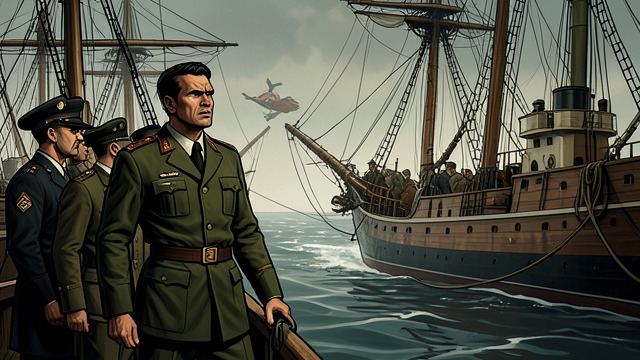
The convoy’s vessels differ in engines, handling, fuel, and response to the sea. Even a small difference in speed can grow dangerous when ships are close together.
The greater variable
George Krause recognizes that the human variable is more consequential still. A misunderstood order, a slow reaction, or an incorrect calculation can create disaster faster than a ship’s mechanical weakness.
Command as coordination
The story’s danger does not arise from equipment alone. It emerges when imperfect people must coordinate complicated machines under pressure and with little time to correct mistakes.
A Talker’s Clear Report
A Talker’s Clear Report
Words under pressure
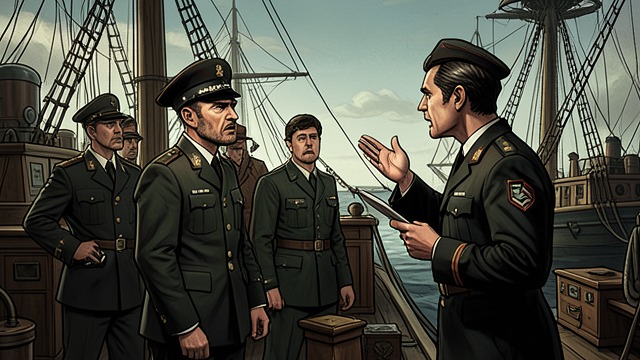
As a submarine fires torpedoes, a talker uses an imprecise announcement. George Krause immediately orders him to report in the trained form and repeat the information clearly.
Communication as survival
Keeling needs accurate reports to distinguish torpedoes, contacts, and bearings. A single muddled phrase could delay a turn long enough to place the ship in the torpedo’s path.
Discipline with purpose
George Krause’s sharp correction may sound harsh, but it responds to a genuine danger. Standard language is not ceremony for its own sake; it is a tool that allows a frightened crew to act together.
Errors and Adaptation
Errors and Adaptation
Forgetfulness under fatigue
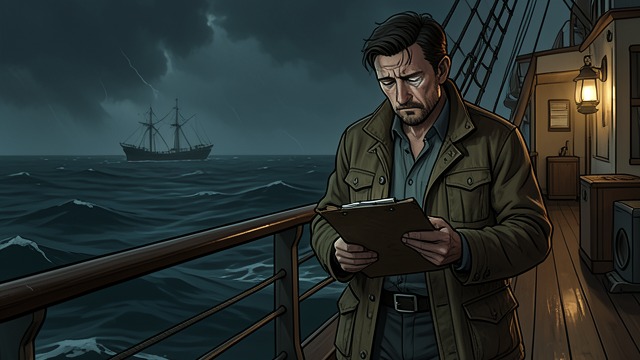
George Krause notices that even he has forgotten routine tasks and nearly fallen asleep while responsible for the ship. His discipline does not make him immune to the limits he has recognized in others.
Others act well
Carling makes a sound routine decision, while Charlie Cole continues supplying information and caring for exhausted officers. The crew’s reliability varies, but it is not fixed by one mistake.
A living command system
The ship survives through correction, trust, and adaptation among people with different abilities. The human variable creates danger, but it is also the source of judgment and resilience that machinery cannot provide.
At the opening of the convoy voyage
Thursday afternoon during the torpedo attack on Keeling
Friday morning as the watch changes
